We should probably start with talking about an import versus an export.
An import shipment would would typically start with an inquiry from a customer. We would collate the pricing, all the various elements, because there’s a number of considerations that goes into every transaction, collection points, collection costs, holding costs, crating, those types of things. We will pull that together.
If the customer wants to move forward, we would then send them the suite of documents that we need completed. Once we’ve got all that documentation together, it goes into our system, and we start working on bookings with carriers, transport companies, etc.
Once it’s in a container and on the water, we will start working on customs entries, bringing all of those charges together, providing an invoice to a customer and so forth prior to arrival, so we can handle pay for the duty and GST that’s applicable. This means that once it touches down, we’re good to go in arranging quarantine.

The quarantine inspection process is probably the most contentious part of the whole process because you just don’t know how long that process is going to take and what the outcome is going to be. We could have a quarantine inspection arranged for tomorrow morning, or they could they could tell us they’ll come out at Thursday next week, and that becomes a little bit tedious for people.
But it is what it is. As soon as those vehicles have, let’s just say hypothetically it passes, the vehicle is available for collection and or delivery.
If it doesn’t pass, we then need to feed it back into the system as far as a washing is concerned over an approved quarantine wash pad with appropriate runoff for liquids and all that type of stuff, and then we have to put it back into that scheduling system for another inspection, and it just keeps going around in circles like that until it passes.
Now that’s an import shipment. For an export shipment, it’s it all starts the same way as far as you know identifying what the costs are throughout the whole chain, bringing those elements together, sending through that suite of documents to that customer to to complete all the aspects of that whole process.
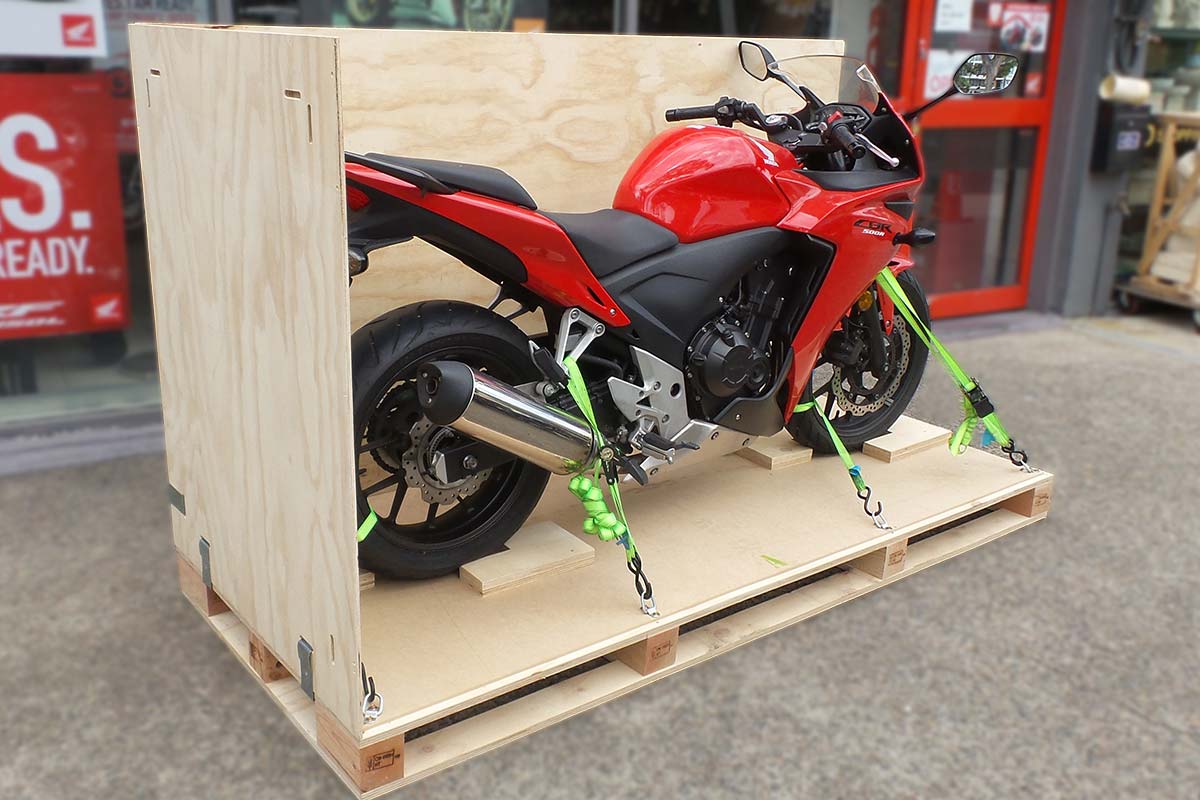
Then instead of arranging collection overseas, we’re arranging collections here, or we’re arranging for receipt of a bike at one of our local crating stations, where we take over.
We offer crating as as a service prior to to a vehicle being exported. If you don’t have consolidation containers, every vehicle must be crated. So, if we’re not in control of that container, we’re relying on third parties to take our vehicle in their consignment as a bulk sort of neutral wholesale type platform, and they can’t be trusted to handle vehicles with the same sort of quality and competence that that we would. So, all motorcycles are created if they’re outside of those consolidation services, and you know the rest is very similar.
Once it departs Australia, we provide tracking to to the customer. We monitor each shipment and provide updates as we go, progressively, routinely.
Once it gets to the destination, depending on what type of transaction it is, whether it’s a sale or a traveler or otherwise, we’ll connect them with the right people at the other end who are typically working for us and being paid by us, but we’re connecting the customer just for communication and collection arrangements.
And that that’s about the sum of it. Now that’s predominantly ocean freight. When it comes to vehicles themselves, four wheel drives etc., you’re not really going to crate them. They’re going directly into containers, or they’re going on ro-ro services. The the service itself, what we offer is very similar, but we work within the parameters of the cargo particulars.